
How to Develop a Custom Mascot or Authorized IP Plush Product
A successful custom mascot plush must do more than resemble a drawing. It needs to preserve the character’s identity from multiple angles, translate well into soft materials, meet the commercial brief, and remain practical to manufacture repeatedly. When the subject is a licensed character, the project also requires clear authorization and an approval trail.
Beibaotoys is a Shandong custom manufacturer established in 2020. Its publicly described capabilities include minor customization, drawing-based and sample-based customization, and ODM support. Public categories include IP Series products, while disclosed production controls include material traceability, on-site incoming-material inspection, and QA/QC processes. These capabilities can support a structured development program, but every specification, test, approval, quantity, cost, and schedule still needs project-level confirmation.
This guide explains how buyers can organize that process for either an original mascot or a legally authorized IP.
Start by Confirming What You Have the Right to Make
There are two valid starting points:
- An original mascot: the buyer owns or controls the artwork and has the authority to commission merchandise.
- An authorized IP: the buyer has permission from the relevant rights holder or an authorized licensor to develop the specified products.
A manufacturer should not be asked to copy a third-party character, branded design, celebrity likeness, or other protected creative asset without authorization. “Inspired by” language does not automatically remove infringement risk when the result still reproduces recognizable protected elements.
For licensed work, the buyer should confirm the licensed product category, territory, sales channels, permitted manufacturers, approval procedure, and license term. The buyer should also verify whether packaging, hangtags, marketing images, and factory identification require separate approval. These matters are the buyer’s responsibility and should be documented before production. This article is operational guidance, not legal advice; consult qualified counsel or the relevant rights holder for legal interpretation.
Build a Complete Character Asset Pack
A clean asset pack reduces interpretation and shortens revision cycles. Ideally, provide:
- Front, side, and back character views
- Three-quarter views for complex heads, ears, tails, or clothing
- Official color references, preferably Pantone or another agreed system
- Logo and graphic files in editable vector format
- Close-ups of eyes, mouth, markings, accessories, and signature textures
- A character scale or proportion guide
- “Must keep” and “may simplify” notes
- Approved and prohibited poses or expressions
- Packaging, label, and copyright-line requirements
- Reference samples, if available and legally controlled by the buyer
If only one flat illustration exists, clearly label uncertain areas. For example, explain whether a cape continues around the back, whether a spot is printed or a separate fabric panel, and how a hairstyle should appear in profile. Assumptions made during prototyping often become expensive changes later.
Identify the Character’s Recognition Anchors
Not every visual detail carries equal weight. Before pattern development, identify the features that make the character recognizable at a glance. These may include:
| Recognition anchor | Questions to resolve | Typical production approach |
|---|---|---|
| Silhouette | Which ears, hair, hat, limbs, or tail define the outline? | Pattern shaping, inserts, controlled stuffing |
| Face | What are the exact eye spacing, mouth angle, and expression? | Embroidery, appliqué, or project-approved components |
| Proportions | Is the head intentionally oversized? How short are the limbs? | Dimension ratios and measurement tolerances |
| Color blocking | Which areas must remain distinct? | Separate fabric panels, embroidery, or print |
| Signature detail | Is there a badge, scar, bow, emblem, or garment? | Sewn accessory, embroidery, appliqué, or print |
| Pose | Must the mascot sit, stand, hang, or remain floppy? | Internal pattern and stuffing distribution |
Classify each feature as critical, important, or optional. This helps the team protect brand identity while simplifying details that do not survive well at the intended size.
Translate 2D Artwork into a Soft 3D Form
A drawing can ignore gravity, seam placement, fabric stretch, and stuffing volume; a plush product cannot. The pattern maker must interpret flat artwork as connected panels that form a stable three-dimensional shape.
Begin with target dimensions and intended use. A display mascot, a small promotional item, and a child-oriented plush may require different construction choices. Establish overall height, seated height if applicable, width, depth, and key feature dimensions. Use ratios—such as head height as a percentage of total height—to preserve the character across sizes.
Next, review the design from all sides. A face that looks correct from the front may appear too flat in profile. Tall ears may lean, a large head may need more neck support, and a layered costume may add bulk. Request photographs or video of each sample from consistent front, side, back, and three-quarter angles rather than approving from one hero image.
Simplify Without Losing Identity
Simplification is often essential, especially at smaller sizes. Thin fingers, tiny text, sharp spikes, narrow gaps, and dense gradients may not translate reliably into fabric and stitching. The goal is not to remove personality; it is to preserve the strongest cues using production-appropriate methods.
Useful decisions include:
- Combining minor color zones that do not affect recognition
- Replacing tiny layered parts with embroidery or appliqué
- Enlarging important facial details for legibility
- Converting a complex gradient into approved solid color blocks
- Thickening fragile projections or changing their attachment method
- Removing micro-text that cannot be reproduced clearly
Every simplification should be shown to the buyer or licensor. For authorized IP, do not treat a factory suggestion as brand approval.
Specify Color, Fabric, Embroidery, and Applied Details
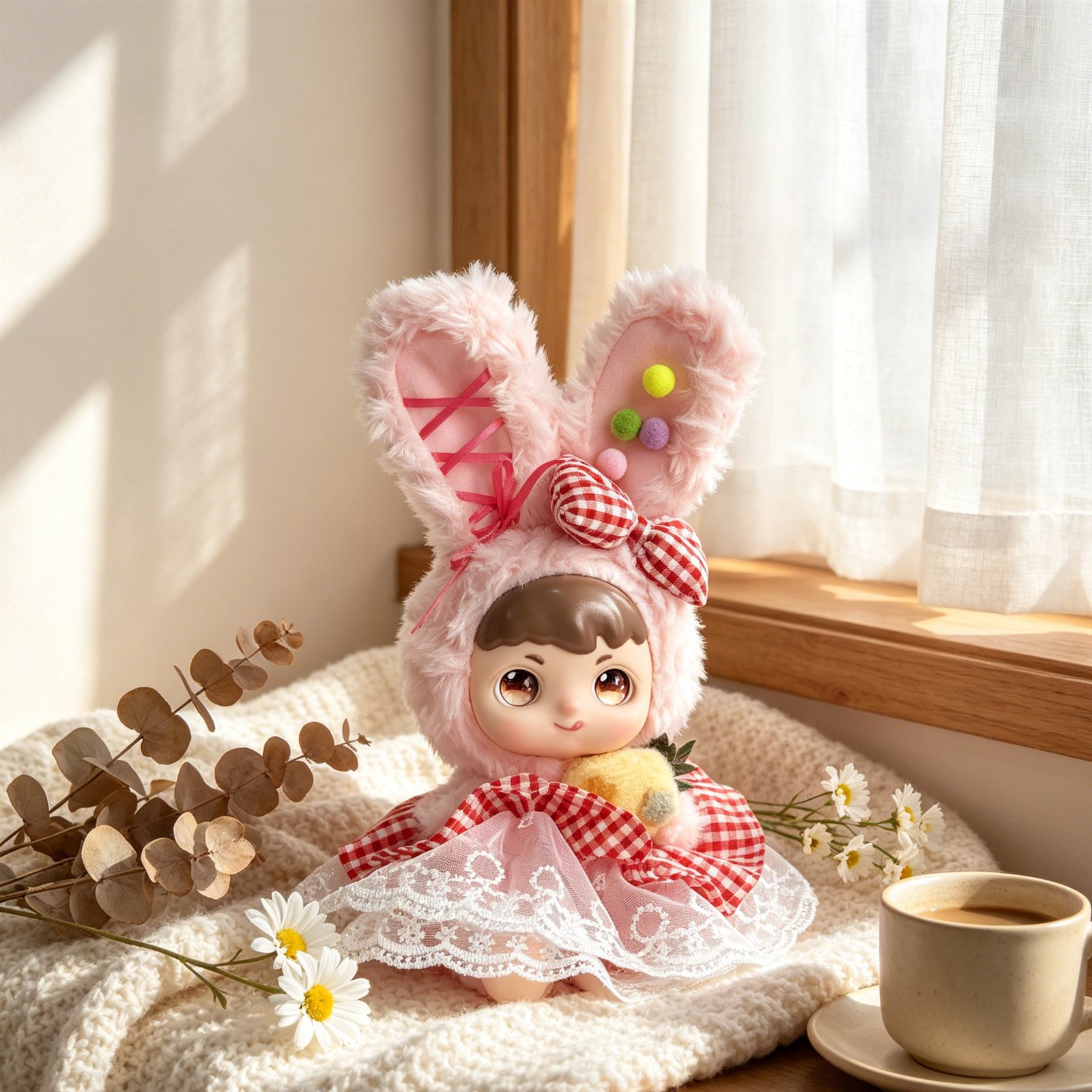
Color approval should combine a numeric or physical reference with the actual material. The same color can appear different on short pile, long pile, velour-like fabric, embroidery thread, or printed fabric. Evaluate swatches under agreed lighting and record the selected material codes.
For embroidery, provide artwork, location, finished dimensions, thread colors, and orientation. Small eye highlights, narrow outlines, and closely spaced stitches may need adjustment after a stitch-out. Ask the sample team to flag puckering, distortion, or pile covering the design.
Applied details also need explicit instructions. Define whether logos are embroidered, printed, woven, or placed on a label; whether clothing is removable; and whether accessories are permanently attached. Any safety, labeling, age-grading, or market-access requirement must be identified by the buyer and confirmed for the specific SKU and destination.
Control Samples as Numbered Versions
Avoid comments such as “make it cuter” or “use the previous eyes.” Use a version-controlled review process instead:
- Assign each sample a unique version number and date.
- Photograph it against a scale from standard angles.
- Consolidate all stakeholder comments into one marked file.
- Reference exact measurements, colors, and locations.
- Separate mandatory corrections from preferences.
- Record what changed and what stayed unchanged.
- Obtain written approval of the final reference sample.
A sample log can include fields for pattern version, fabric and thread codes, accessory revisions, label copy, packaging status, reviewer, and approval date. Retain an approved physical sample when feasible and define how it will be used as the comparison reference for production.
Plan the Product as a Series
A mascot often performs better as a coordinated family rather than a single item. After the hero design is stable, consider extensions such as alternate sizes, pendants, bag charms, seasonal costumes, plush bags, cushions, or retail gift sets. Beibaotoys publicly presents categories including IP Series, Handbags, and Plush Bags, which can provide useful directions for a broader brief; actual feasibility is confirmed per concept.
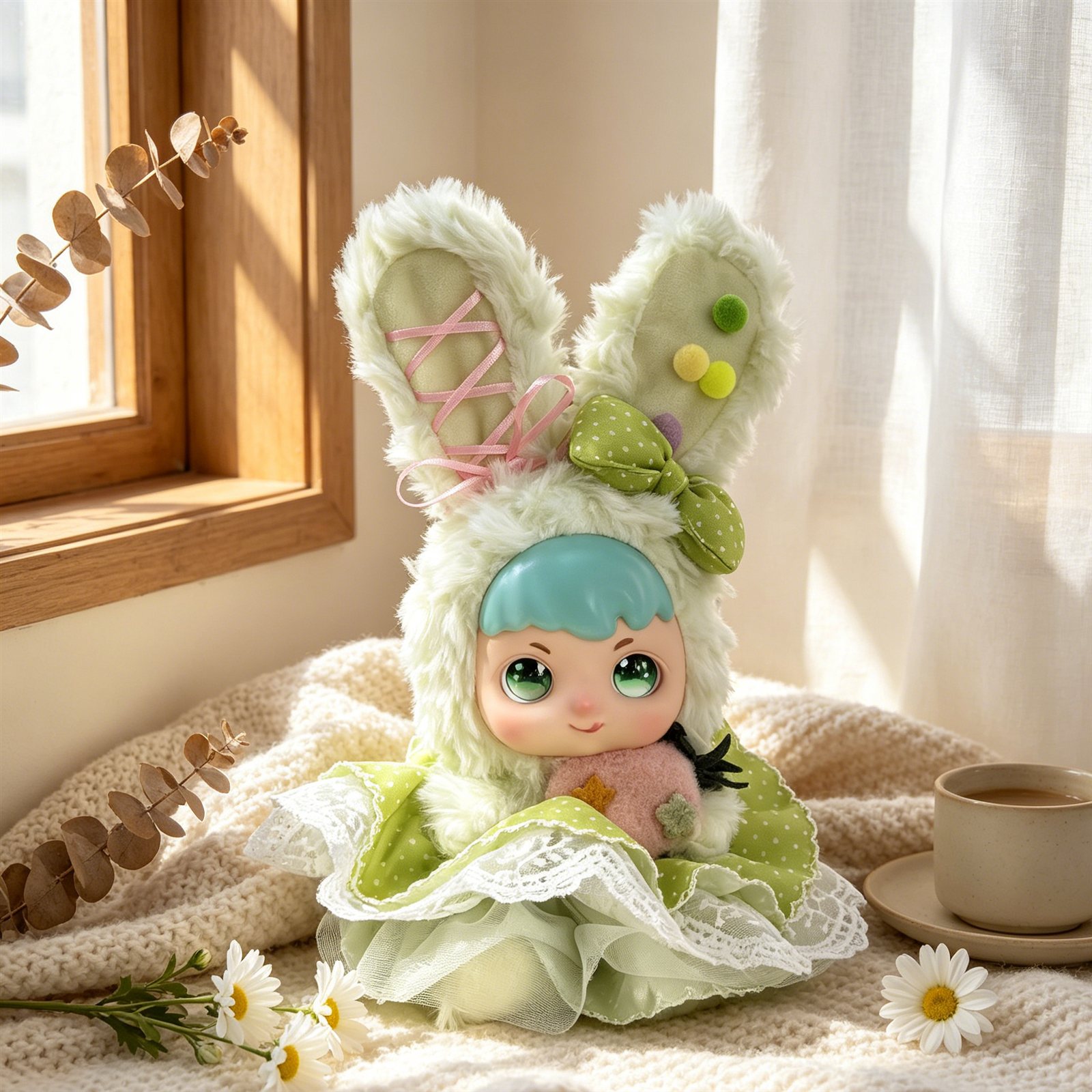
Protect consistency by creating a mini style system: fixed face proportions, approved color and material palette, logo rules, shared labels, packaging hierarchy, and naming conventions. Then document which elements may vary by size or format. Do not simply shrink the original pattern; small versions commonly need larger facial features and fewer construction details.
Confirm Production and Quality Requirements Per Project
Before an order moves forward, align the specification, approved sample, packaging, inspection method, and applicable testing plan. Beibaotoys reports material traceability, incoming-material inspection on site, and QA/QC practices. Buyers should still agree on the evidence and checkpoints required for their individual project.
Confirm the target market, age grade, product classification, applicable standards, test protocol, labeling language, inspection level, and document owner. Requirements can differ by product, destination, and sales channel. Never assume that a certificate for one item, material, or previous order covers a new SKU.
Frequently Asked Questions
Can Beibaotoys copy a popular character from an online image?
No. A third-party character should not be copied without valid authorization. Submit original assets you control or documented licensed assets, and confirm the permitted product scope, territory, channels, and term.
Is a front-view drawing enough to start?
It can begin a feasibility discussion, but front, side, and back views produce a more controlled result. Mark any unknown areas and expect the first prototype to resolve 3D interpretation questions.
How many samples will be required?
There is no universal number. Complexity, clarity of the asset pack, material availability, and approval requirements affect iterations. Establish a numbered sample and review process for the specific project.
Should every small illustrated detail be reproduced?
Not necessarily. Details should be assessed for recognition value, scale, durability, and production practicality. Any proposed simplification should receive buyer approval and, for licensed IP, approval through the required licensor process.
Can one approved mascot be extended into multiple products?
Yes, subject to design feasibility and the buyer’s rights. A controlled style guide helps maintain identity across sizes and formats. Licensed product categories must fall within the authorization.
Does Beibaotoys provide legal clearance for IP rights?
No legal clearance is implied. The buyer must verify ownership or authorization and obtain professional legal advice where needed. The factory can request documents and follow approved artwork, but it does not replace legal counsel.
Recommended Internal Links
- Custom Plush Toy Manufacturing Process
- How to Prepare a Plush Toy Design Brief
- Plush Toy Materials and Fabric Selection Guide
- Plush Sampling and Quality Control Checklist
- Explore IP Series Products
- Explore Plush Bags and Handbags
Ready to Develop Your Character?
Send Beibaotoys your original or legally authorized character asset pack, target dimensions, intended market, quantity range, packaging needs, and desired launch window. The team can review drawing-based, sample-based, minor-customization, or ODM routes and identify the project-specific questions to resolve before sampling.