
OEM, ODM, and Private Label Plush Toys: Which Development Route Fits Your Project?
“OEM,” “ODM,” and “private label” are often treated as separate services, but plush projects sit on a spectrum. A buyer may add a woven label, provide finished character artwork, or submit an authorized physical sample. The best route depends on product maturity, control requirements, intellectual property rights, and remaining development work.
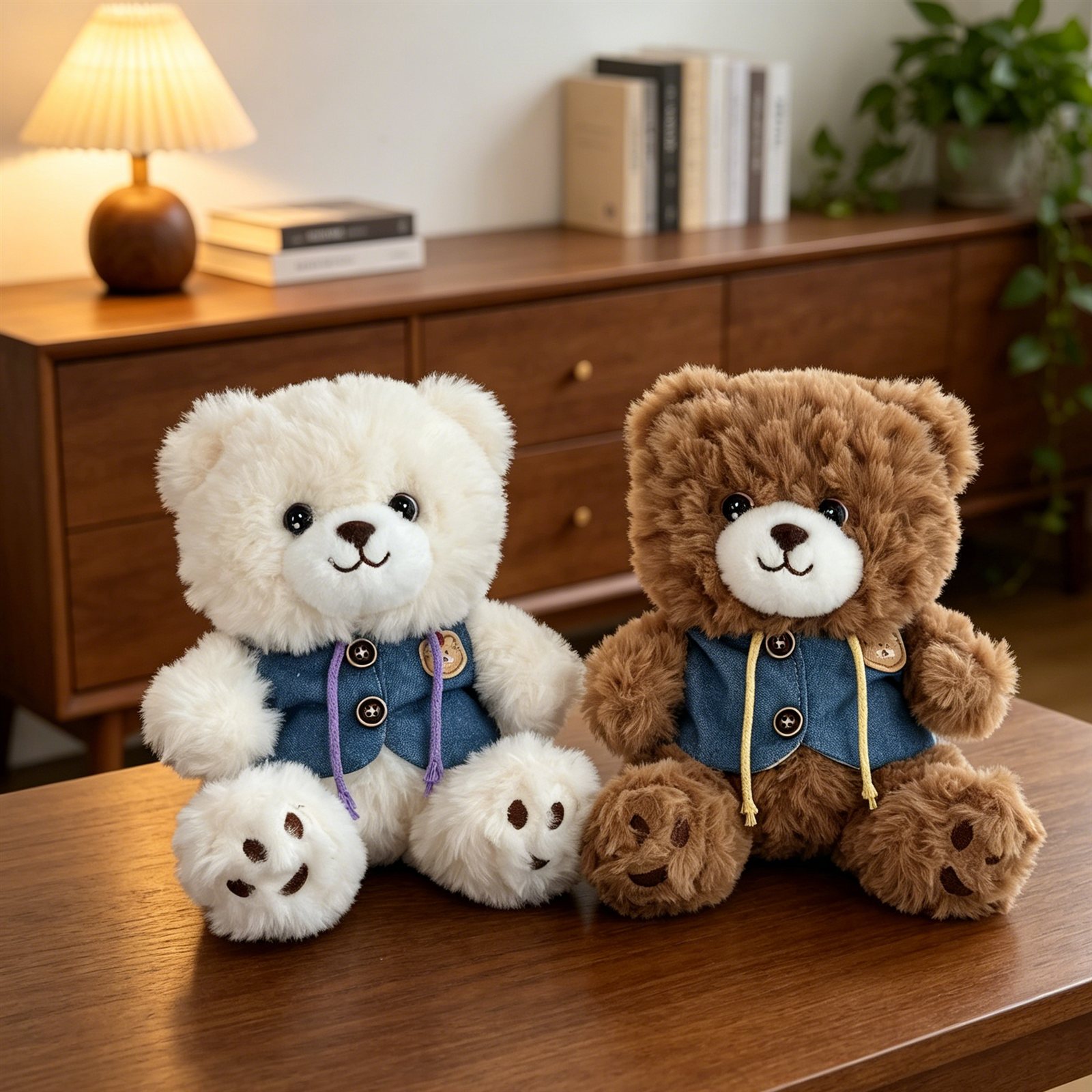
Beibaotoys is a Shandong custom manufacturer established in 2020. Its publicly presented categories and quality capabilities can support an initial sourcing discussion, but every project requires a specific review of design feasibility, materials, branding, testing, packaging, timing, and commercial terms. This guide explains how to prepare that discussion without treating service labels as guarantees.
First, Separate the Five Common Development Routes
1. Minor customization
Minor customization starts with an existing or already-developed product direction and changes limited elements. Typical requests include a color adjustment, embroidered logo, printed accessory, hangtag, woven label, or packaging variation.
This route can reduce design ambiguity because the underlying construction is more mature, but “minor” does not mean automatic. A new logo position can affect embroidery backing; a fabric-color change can alter hand feel; branded hardware may trigger different tests. The manufacturer must confirm which elements can be changed and whether the requested version affects compliance, appearance, construction, or order terms.
2. Drawing-based custom development
The buyer provides character artwork, views, dimensions, color references, and feature notes. The manufacturer translates the two-dimensional design into a three-dimensional plush pattern and sample.
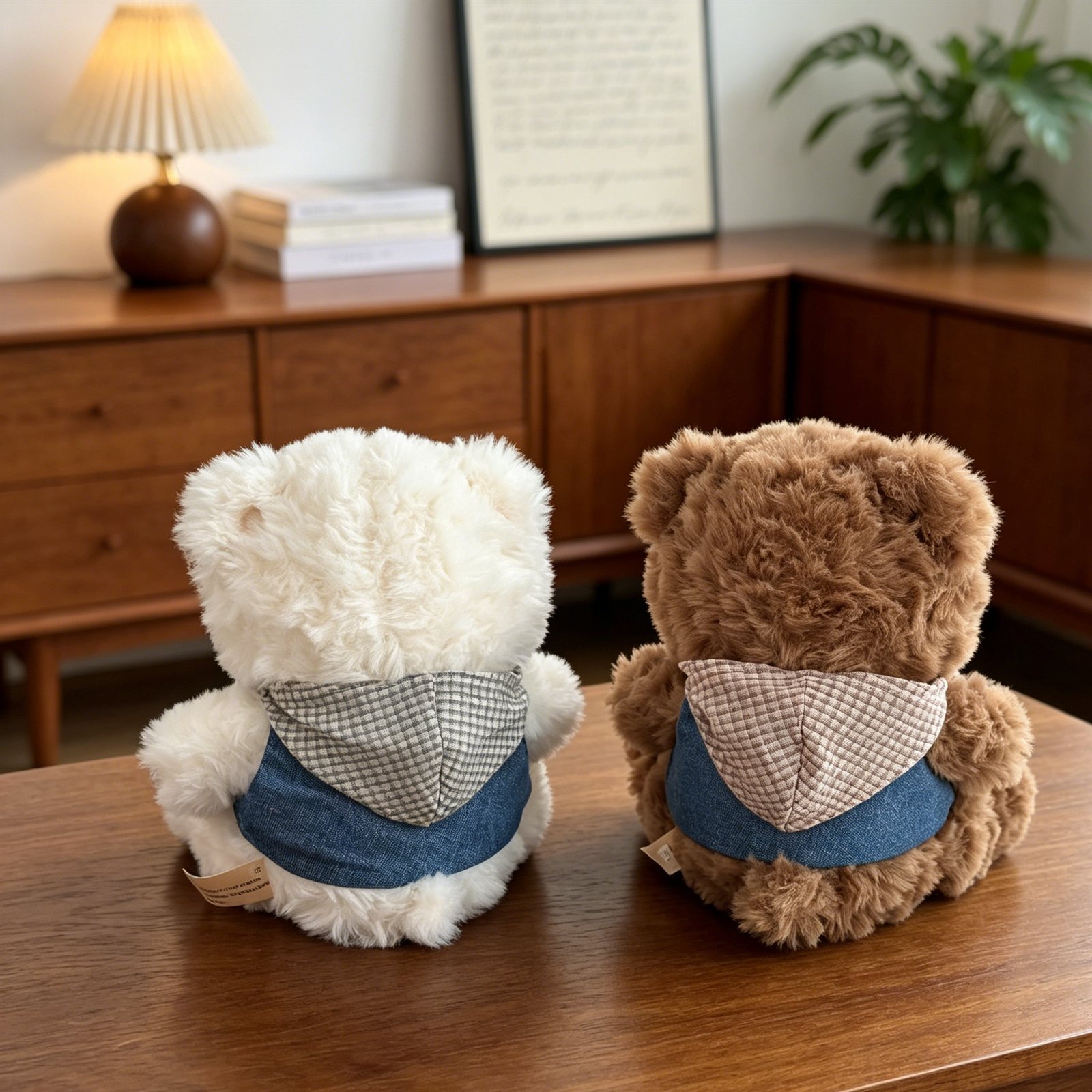
This route is suitable when brand identity is established but the plush engineering is not. It usually involves decisions about proportions, seams, pile direction, embroidery, appliqué, filling, stability, and how stylized details should be interpreted. Front artwork alone is rarely sufficient; side and back views reduce guesswork.
3. Sample-based development
The buyer supplies a physical reference sample or detailed sample data. The goal may be to reproduce the buyer’s own design, improve construction, change materials, or create a clearly differentiated product using the sample as a functional reference.
A physical object communicates volume better than a flat drawing, but it does not establish ownership rights. Buyers should state what they own and what may be replicated. Do not request copies of protected third-party characters, trademarks, packaging, or design features without authorization.
4. ODM development
In an ODM-style route, the manufacturer contributes more of the product concept or offers a manufacturer-originated design platform that the buyer may adapt, subject to agreed rights and availability. The buyer can focus on market, audience, brand direction, target positioning, and required features while reviewing proposed designs.
The degree of exclusivity is not inherent in the term “ODM.” Buyers should clarify ownership of artwork and patterns, permitted sales channels or territories, exclusivity if any, change rights, and whether similar designs may be offered elsewhere. These points belong in written agreements.
5. Private label
Private label usually means selling a product under the buyer’s brand, often using an existing or lightly modified product platform. Branding may include sewn-in labels, hangtags, packaging, inserts, barcode placement, or retail marks.
Private label describes how the product is branded, not necessarily who designed every component. It can overlap with minor customization or ODM. A private-label plush may still require market-specific testing, traceability, warnings, packaging validation, and proof that the design can legally carry the buyer’s brand.
Choose Based on Product Maturity
A buyer with a target customer but no character may benefit from ODM-oriented discussion. Approved character art supports drawing-based development, while a complete technical pack supports controlled OEM-style execution. A retailer seeking limited differentiation may explore private label or minor customization if the design and commercial rights fit.
“More custom” is not always better. Custom development increases the number of decisions and iterations. Conversely, choosing a lightly customized route when the buyer needs a unique character can produce an undifferentiated result or force late changes.
Decision Matrix
| Project condition | Likely route to discuss | Minimum useful inputs | Main decision risk |
|---|---|---|---|
| Brand and audience defined, but no finished character | ODM-oriented development | Mood board, audience, use case, target positioning, do/don’t examples | Unclear ownership or overly broad creative brief |
| Finished character artwork, no plush pattern | Drawing-based custom/OEM | Front, side, back views; dimensions; colors; feature priorities | 2D details may not translate directly into fabric |
| Buyer owns an approved physical design sample | Sample-based custom/OEM | Sample, ownership statement, change list, measurement sheet | Reference condition or rights are unclear |
| Existing product direction needs logo/color/packaging changes | Minor customization | Selected base, artwork files, color references, branding locations | “Small” change affects construction or testing |
| Retailer wants a branded product platform | Private label, sometimes combined with ODM | Brand guide, label copy, packaging, market and channel | Branding assumed to replace compliance review |
| Full technical pack and controlled specifications available | OEM-style execution | Tech pack, BOM, tolerances, artwork, test and packaging requirements | Conflicting revisions or unachievable specifications |
Treat this matrix as a starting point. A project may move between routes: an ODM concept can become a controlled OEM production file after design approval, while a private-label request can become custom development if the buyer requests structural changes.
Inputs That Make Development More Efficient
Regardless of label, provide a concise project brief. The following checklist helps a manufacturer evaluate feasibility and identify missing decisions:
- intended user, use case, sales channel, and destination market;
- character artwork or visual direction, including front, side, and back views;
- evidence that the buyer owns or is authorized to use submitted IP;
- target dimensions with clear measurement methods;
- preferred fabrics, filling, color standards, embroidery, and accessories;
- functional requirements, such as sitting posture, keychain attachment, sound module, or removable clothing;
- logo artwork in suitable production format and defined placement;
- packaging concept, label copy, barcode and shipping constraints;
- applicable safety, chemical, labeling, and retailer requirements identified with qualified advisers;
- desired review stages and authorized approvers;
- forecast context and target launch window for planning—not as a promise of acceptance or timing.
Mark each input as fixed, preferred, or open to supplier recommendation. This simple distinction prevents teams from spending time redesigning a non-negotiable brand feature or protecting a preference that could be changed to improve manufacturability.
Brand Labels and Packaging Are Product Specifications
Branding should be engineered into the product rather than added at the end. For a sewn-in label, define material, finished size, fold, print or weave method, colors, seam location, orientation, content, and durability requirements. Determine whether the branding label is separate from required tracking, fiber, care, warning, or importer information.
For hangtags and packaging, supply approved artwork, dielines, dimensions, materials, finishing, attachment method, barcode position, languages, and carton marks. Assign responsibility for copy accuracy and regulatory review. Packaging can affect plush recovery, presentation, freight volume, and test scope.
Request a complete branded sample or packaging mock-up when these elements influence retail presentation. A generic toy sample with branding approved only on-screen may not reveal label bulk, color differences, tag orientation, or package fit.
What Drives Cost and Time?
Cost and development time can be influenced by:
- number and complexity of pattern pieces;
- fabric type, pile, stretch, color availability, and custom finishing;
- embroidery stitch area, print method, appliqué, and facial detail;
- filling, internal supports, electronics, magnets, or accessories;
- prototype rounds and the speed of consolidated buyer feedback;
- custom labels, hardware, packaging structure, and artwork versions;
- material sourcing and color matching;
- testing, documentation, inspection, and destination-market requirements;
- product size, packed volume, assortment structure, and shipping plan;
- design-rights review and any licensed-brand approval workflow.
Changing the concept after sample approval can affect several items at once. For example, increasing head size may require pattern revisions, additional filling, different package dimensions, new stability assessment, and updated artwork placement. Ask for a project-specific quotation and schedule based on the current revision, then use formal change control.
Protect Intellectual Property and Define Rights
A custom manufacturer can help translate an authorized concept into a product, but manufacturing access is not an IP license. The buyer should own the design or hold written permission covering the intended product, market, channel, territory, and term. Avoid submitting famous characters, logos, trade dress, or copied samples unless authorization can be demonstrated.
For original work, contracts should address confidentiality, ownership of buyer-supplied artwork, ownership or permitted use of supplier-created concepts and patterns, tooling or development assets where applicable, exclusivity, portfolio photography, subcontractor access, and treatment of rejected ideas. For licensed properties, follow the licensor’s approval workflow and brand guidelines.
Neither “OEM,” “ODM,” nor “private label” automatically answers these questions. Put the agreed rights in writing and obtain qualified legal advice when needed.
FAQs
Is OEM always fully custom?
Not necessarily. OEM is used differently across suppliers and markets. Define the actual deliverables: who supplies the design, which parts are customized, who owns development outputs, and what approvals are required.
Can private-label plush toys use custom packaging?
They often can, subject to project review. Packaging materials, printing, dielines, labels, barcodes, language, warnings, package fit, and destination requirements should be specified and approved rather than assumed.
What artwork is needed for drawing-based plush development?
Front, side, and back views are preferable, with color references, target dimensions, logo files, expression details, and notes identifying fixed versus flexible features. Close-ups help explain embroidery and small accessories.
Can a manufacturer copy a plush sample I purchased?
A purchased sample does not automatically grant reproduction rights. Use samples you own or are authorized to reproduce, or identify only unprotected functional references while creating a differentiated design. Seek legal advice for uncertain cases.
Does ODM automatically include exclusive rights?
No. Exclusivity, territories, channels, duration, ownership, modification rights, and use of related designs must be explicitly discussed and documented.
Which route is best for a first-time buyer?
The best route depends on what is already defined. A first-time buyer with clear artwork may choose drawing-based development; one with only a market idea may discuss ODM; one seeking limited branding may consider private label. Start by documenting goals, rights, market, specifications, and decision authority.
Recommended Internal Links
- Custom Plush Toy Manufacturing Process
- Plush Toy Size and Measurement Guide
- Plush Toy Materials and Fabric Selection Guide
- Plush Toy Quality Control and Inspection Checklist
- Request a Custom Plush Toy Quote
CTA: Match the Development Route to Your Starting Point
Send Beibaotoys your authorized artwork or reference, project brief, target market, dimensions, branding plan, packaging needs, and the decisions that are still open. The team can review whether minor customization, drawing-based development, sample-based development, ODM, private label, or a combined route is the most practical basis for a project-specific proposal.