

Selecting a plush toy manufacturer requires more than comparing attractive catalog photos. A supplier may look convincing online yet be unsuitable for your product type, target market, quality level, or documentation needs. Effective due diligence turns broad claims into verifiable, project-specific evidence before you commit to production.
The objective is not to find a supplier that promises everything. It is to identify one that can define what it will make, show how it controls the work, disclose what remains to be confirmed, and respond consistently when requirements change. Use the following framework to organize that review.
1. Confirm the legal and commercial identity
Begin with the entity that will quote, contract, invoice, receive payment, manufacture, and export. Ask for its registered company name, business address, business license, relevant contact details, and the relationship between any factory, trading, brand, or export entities involved.
Names can legitimately differ across websites, trade-show materials, and legal documents. The important point is traceability: your purchase order, payment instructions, test reports, shipping papers, and supplier declarations should use entities whose roles are clear. If a different company will manufacture or export, document that arrangement before ordering.
2. Test product relevance, not just category overlap
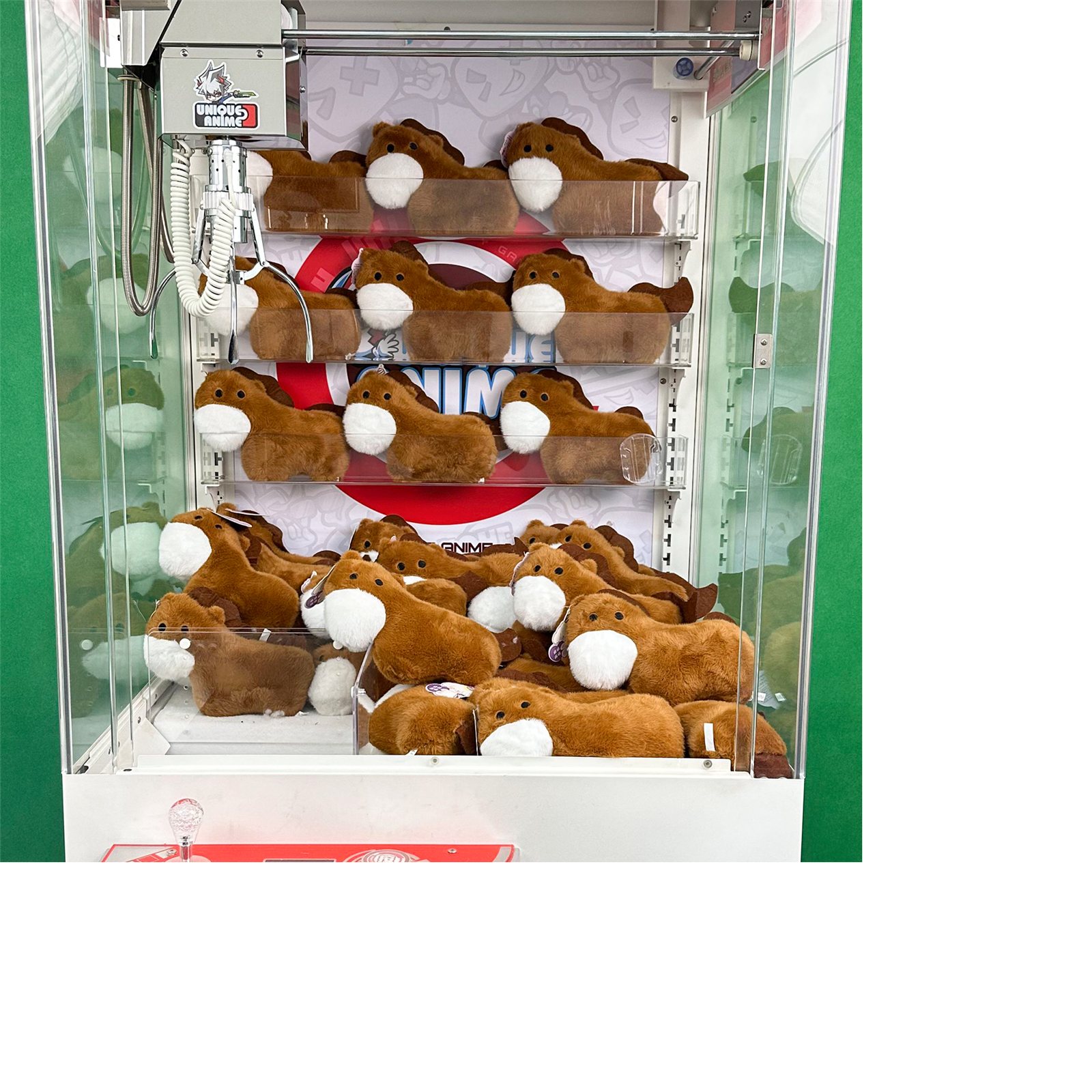
“Plush toys” is a broad category. A factory experienced in small claw-machine items may not automatically be the right choice for structured plush bags, large cushions, complex mascots, or products with multiple accessories. Request examples that resemble your proposed SKU in size, pile, construction, decoration, filling density, and packaging.
Ask which operations are performed onsite and which are subcontracted. Cutting, embroidery, printing, sewing, filling, needle detection, finishing, inspection, and packing can involve different controls. Outsourcing is not necessarily a problem, but the supplier should explain how external processes are approved and monitored.
3. Use samples as controlled evidence
A sample is valuable only when it is tied to an agreed specification. Record its version, date, materials, dimensions, weight or filling target where relevant, colors, embroidery or print details, accessories, labels, and packaging. Photograph the approved sample and identify whether it is a concept sample, pre-production sample, or shipment reference.
Evaluate more than appearance. Check symmetry, seam construction, loose fibers, shape recovery, hand feel, decoration placement, color consistency, exposed thread ends, odor, labels, and packing method. If the product must interact with a display, gift box, vending machine, or retail fixture, test that physical context too.
A good sample does not prove that every production unit will match it. It establishes a reference against which production controls and inspections can be designed.
4. Examine customization capabilities
Clarify what “custom” means for the specific supplier and project. Minor customization, artwork-based development, sample-based development, and full product-development support require different technical resources. Ask who converts artwork into patterns, selects materials, prepares embroidery files, reviews manufacturability, and approves revisions.
Provide only artwork, trademarks, characters, and physical references you are authorized to use. For each revision, confirm which elements changed and which remained locked. A supplier that asks precise questions about dimensions, fabric direction, face expression, component attachment, and packaging is often giving you useful evidence of process discipline.
5. Verify materials and incoming inspection
Request a bill of materials or equivalent material schedule for each SKU. It should distinguish outer fabrics, filling, thread, embroidery, printed parts, accessories, labels, and packaging. Ask how material lots and approved colors are identified, stored, and linked to production.
Incoming inspection should match the risk. Useful checkpoints may include fabric appearance, shade, width, pile direction, weight, accessory count, label content, and packaging dimensions. If a supplier says it has raw-material traceability or onsite material inspection, ask for a redacted example record and learn what fields are actually captured.
6. Review QA/QC as a system
Quality control is not a single final check. Ask for a process flow and the inspection points used from material receipt through packing. For plush products, relevant controls can include pattern and cutting checks, embroidery or print approval, first-piece review, sewing checks, filling consistency, metal or needle-control procedures where applicable, appearance inspection, measurement, labeling, packing, and pre-shipment inspection.
Agree on defect categories, sampling method, acceptance criteria, inspection timing, rework rules, and shipment-release authority. If the buyer or an independent inspector will conduct a pre-shipment inspection, ensure the purchase order states the applicable specification and approved sample.
7. Read third-party information carefully
Supplier assessments, onsite checks, videos, factory inspection reports, and verified production-line records can help establish that facilities and processes were observed at a particular time. Review the issuer, report date, scope, address, legal entity, sampled areas, limitations, and validity status. Ask for the underlying report rather than relying only on a badge or summary.
For context, a Beibaotoys-linked Alibaba.com supplier page viewed in a 2026-10-04 page snapshot displayed supplier assessment information, an onsite verification attributed to TÜV Rheinland, factory inspection reports, and verified production lines. The same snapshot listed 7 QA/QC inspectors, a 5,354 m² floorspace figure, and 112 total staff. These are time-sensitive platform-displayed facts that should be rechecked against the live profile and source documents before publication or procurement use.
Neither a platform metric nor a third-party mark is a universal guarantee of product quality, compliance, delivery, or commercial performance. It is one input in a broader, SKU-level review.
8. Control specifications and changes
Create a specification pack that both parties can reference. A practical pack includes drawings, measurement method and tolerances, fabric and filling definitions, approved colors, construction notes, decoration files, component details, labels, packaging, carton marks, and inspection criteria.
Use version numbers and dates. Require written approval before substituting material, changing a dimension, moving artwork, revising packaging, or altering a process that affects the product. The purchase order should identify the governing specification version and approved sample. A simple change log prevents informal chat messages from becoming conflicting production instructions.
9. Verify compliance evidence by SKU
Do not ask only, “Are your products certified?” Define the SKU, destination country, intended age grading, use scenario, and sales channel first. Then identify applicable standards, chemical restrictions, mechanical or physical tests, flammability requirements, labeling, traceability, warnings, and importer obligations with qualified compliance support.
Review whether a test report matches the product’s materials, construction, model identification, applicant, manufacturer, laboratory, test methods, and current market requirements. A report for one design, material set, or age grade may not cover another. Confirm testing and document scope for every SKU rather than treating general capability statements as portfolio-wide approval.
10. Compare complete quotations and logistics inputs
A meaningful quotation should state the product specification basis, quantity tiers if offered, packaging assumptions, included customization, testing responsibility, trade term, currency, payment structure, production assumptions, quote validity, and exclusions. Compare like with like; an apparent cost difference may result from different materials, packing, inspection, or freight scope.
For logistics planning, request product and packed dimensions, unit and carton weights, units per carton, carton construction, marks, packing method, loading assumptions, shipment origin, and export-document responsibilities. Validate final packing data with an approved packed sample or production packing record where practical. Treat timing as project-specific and connect the requested ship window to sample approval, material readiness, testing, inspection, and booking milestones.
11. Score communication quality
Communication is operational evidence. Notice whether the supplier answers every question, flags contradictions, distinguishes confirmed facts from estimates, records decisions, and escalates technical issues. Test the process with a concise brief and a numbered question list.
Warning signs include unexplained document mismatches, pressure to bypass verification, vague answers about testing scope, unapproved substitutions, and repeated changes to commercial terms. Strong communication does not eliminate risk, but it makes risk visible early enough to manage.
Buyer’s due diligence checklist
| Review area | Evidence to request | What to verify |
|---|---|---|
| Company identity | License, address, contracting and export entities | Names and roles match transaction documents |
| Product relevance | Similar samples, process map, subcontractor disclosure | Experience aligns with your construction |
| Sample control | Coded sample, photos, signed specification | Reference version is unambiguous |
| Materials | Material schedule, lot records, incoming checks | Materials are defined and traceable |
| QA/QC | Control plan, inspection records, defect rules | Checks cover production, not only finished goods |
| Third-party review | Full reports and validity details | Scope, date, entity, and site are relevant |
| Compliance | SKU-linked reports and document matrix | Evidence matches market, age grade, and product |
| Commercial terms | Assumption-based quotation | Scope and exclusions are comparable |
| Logistics | Packing data and responsibilities | Shipment inputs are documented |
| Communication | Written answers and change log | Decisions are accurate and retrievable |
Frequently asked questions
Is an onsite verification enough to approve a manufacturer?
No. It may confirm selected business and facility information at a point in time, but buyers should still review samples, specifications, quality controls, SKU-specific compliance evidence, commercial terms, and current operating conditions.
How many samples should a buyer request?
There is no universal number. Use enough sample stages to resolve design, materials, construction, packaging, and compliance-relevant questions. Define the purpose and approval status of every sample.
Can one test report cover a whole plush collection?
Only if a qualified review confirms that its product identification, materials, construction, variants, age grading, and test scope cover the relevant SKUs. Do not assume collection-wide coverage.
What should be fixed before production begins?
At minimum, approve the sample and written specification, materials, dimensions, decoration, labels, packaging, inspection criteria, document responsibilities, commercial terms, and change-control method.
Should buyers use an independent pre-shipment inspection?
It can add useful evidence, especially for new suppliers or higher-risk orders. The inspector still needs the correct specification, approved sample, sampling plan, and defect definitions.
What is the clearest sign of good supplier communication?
Look for complete, traceable answers that separate confirmed information from pending items and document changes before they reach production.
Recommended Internal Links
These are suggested relative paths. Confirm or create the destination pages before publication.
- About Beibaotoys
- Quality Control
- Customization Process
- Custom Plush Toys and Stuffed Animals
- Contact the Export Team
Turn Your Due Diligence into a Clear Project Brief
Share your artwork or reference, target size, estimated quantity, destination market, intended user group, packaging needs, and known testing requirements with Beibaotoys. The team can review product feasibility and prepare project-specific questions and quotation inputs. Submit your plush project—then verify the resulting sample, specification, documents, and order terms before approval.

