
How to Choose Plush Toy Sizes and Write Clear Measurement Specifications
A plush toy described only as “10 inches” is not yet production-ready. Does 10 inches mean seated height, standing height, head-to-toe length, or the longest overall dimension including ears? Is the toy measured while relaxed or pulled straight? Does the figure include a soft tail, a fabric loop, or a keychain fitting?
These questions matter because plush products are flexible three-dimensional objects. Filling density, fabric stretch, seam shape, embroidery, and the way an operator positions the toy can all affect a measurement. A clear size specification gives the buyer and manufacturer the same reference point, makes sample review faster, and reduces avoidable disagreements during production.
Beibaotoys is a Shandong custom manufacturer established in 2020. Its public product categories and quality capabilities can help buyers discuss custom plush projects, but the correct dimensions, tolerances, materials, tests, and compliance plan must still be confirmed for each product and market.
Start With the Use Case, Not a Familiar Number
Public product listings across the plush market show size labels such as 4, 7, 8, 10, and 12 inches; metric listings may show 10, 15, 20, 25, and 30 cm. Buyers may also encounter general ranges around 8–14 inches. These are useful reference points for comparison, not universal recommendations. They do not prove that a size suits every channel, remains in stock, or will produce the same visual volume across different designs.
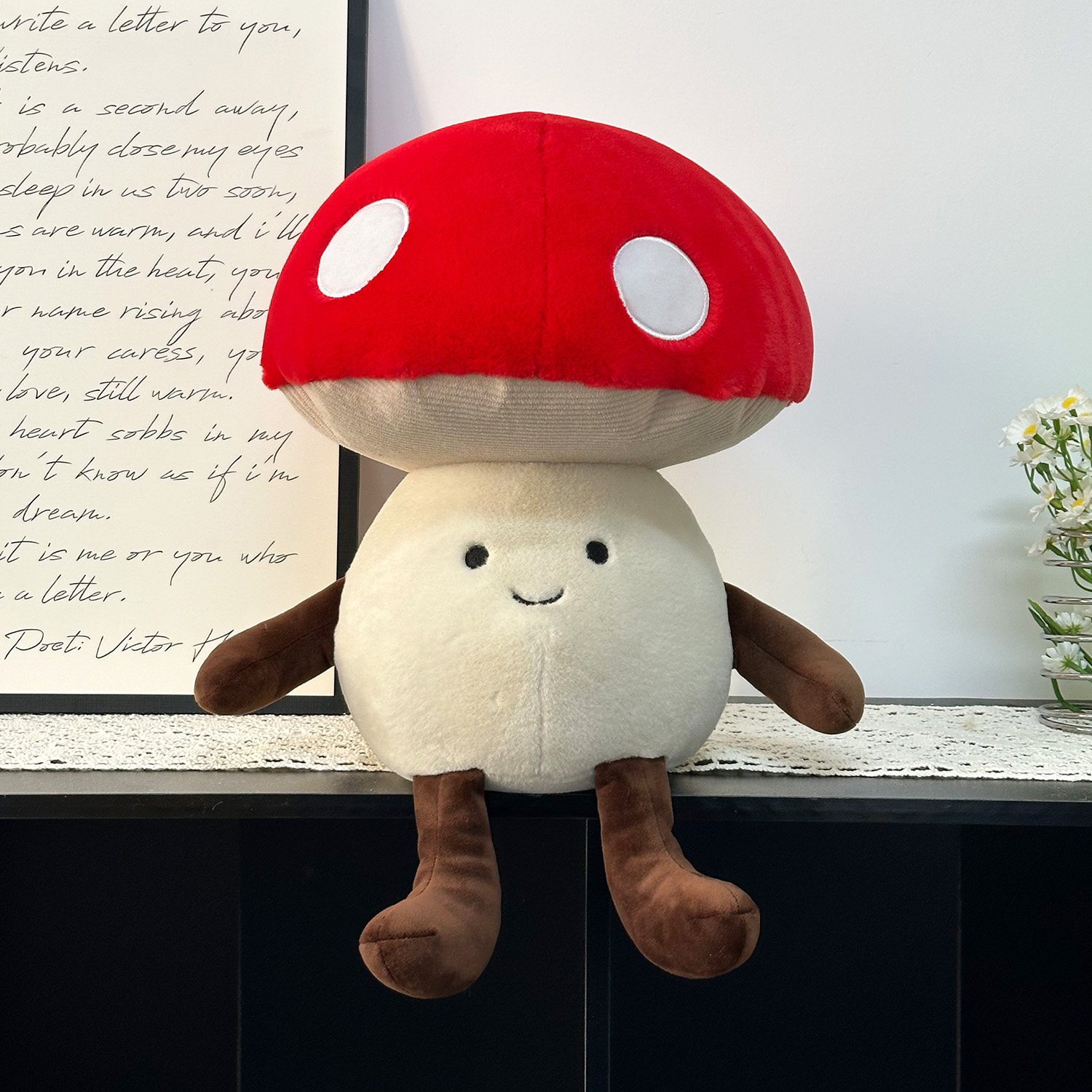
A round animal with a large head may look substantial at the same stated height as a slim character. A seated bear and a standing dinosaur may share a nominal size but need very different cartons and shelf space. Before selecting a number, define what the product must do: fit a crane machine, hang from a bag, sit on a retail shelf, support a gift campaign, or act as a home accent.
Channel-Based Size Questions
| Channel or use | Questions to answer before choosing size | Often-overlooked constraint |
|---|---|---|
| Retail shelf | What is the shelf height, facing width, and intended price architecture? | Ears or packaging may exceed the stated body height. |
| Corporate or event gift | How will the item be distributed, packed, and carried? | Large volume can increase storage and freight requirements. |
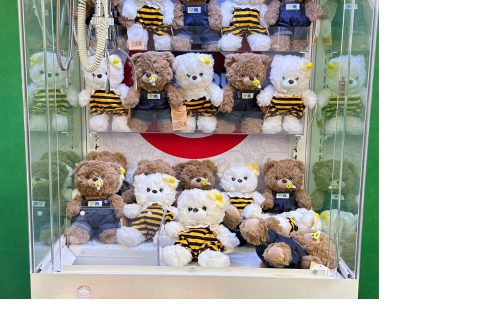
| Claw/crane machine | What are the machine opening, claw geometry, prize chute, and prize mix? | Shape, grip points, and weight distribution matter as much as height. |
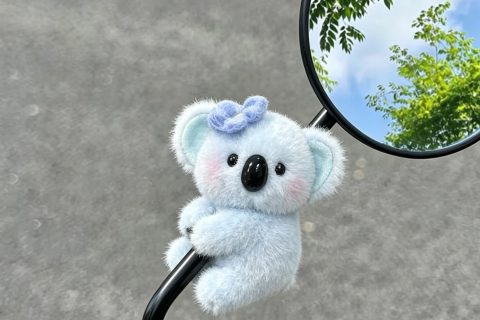
| Bag charm or keychain plush | Where will the attachment point sit, and what is the total hanging length? | Hardware and loops add length and may have separate safety requirements. |
| Home décor | Is the item for a sofa, bed, nursery shelf, or floor display? | Depth and stability can matter more than nominal height. |
Put Inches and Centimeters on the Same Sheet
For international teams, record both inches and centimeters. Use one unit as the controlling unit and show the other as a rounded reference. Since 1 inch equals 2.54 centimeters, repeated conversion and rounding can otherwise create contradictory limits.
For example, if the controlling dimension is 25.0 cm, its reference conversion is approximately 9.84 inches. Do not independently write “10 in” as another controlling target unless the difference is intentional. State the conversion rule and rounding precision in the specification.
A useful header is:
- Controlling unit: cm
- Reference unit: in, converted at 1 in = 2.54 cm
- Rounding: reference values shown to two decimal places
- Measurement condition: unpacked and conditioned as defined below
Define Every Measurement Point
Seated height
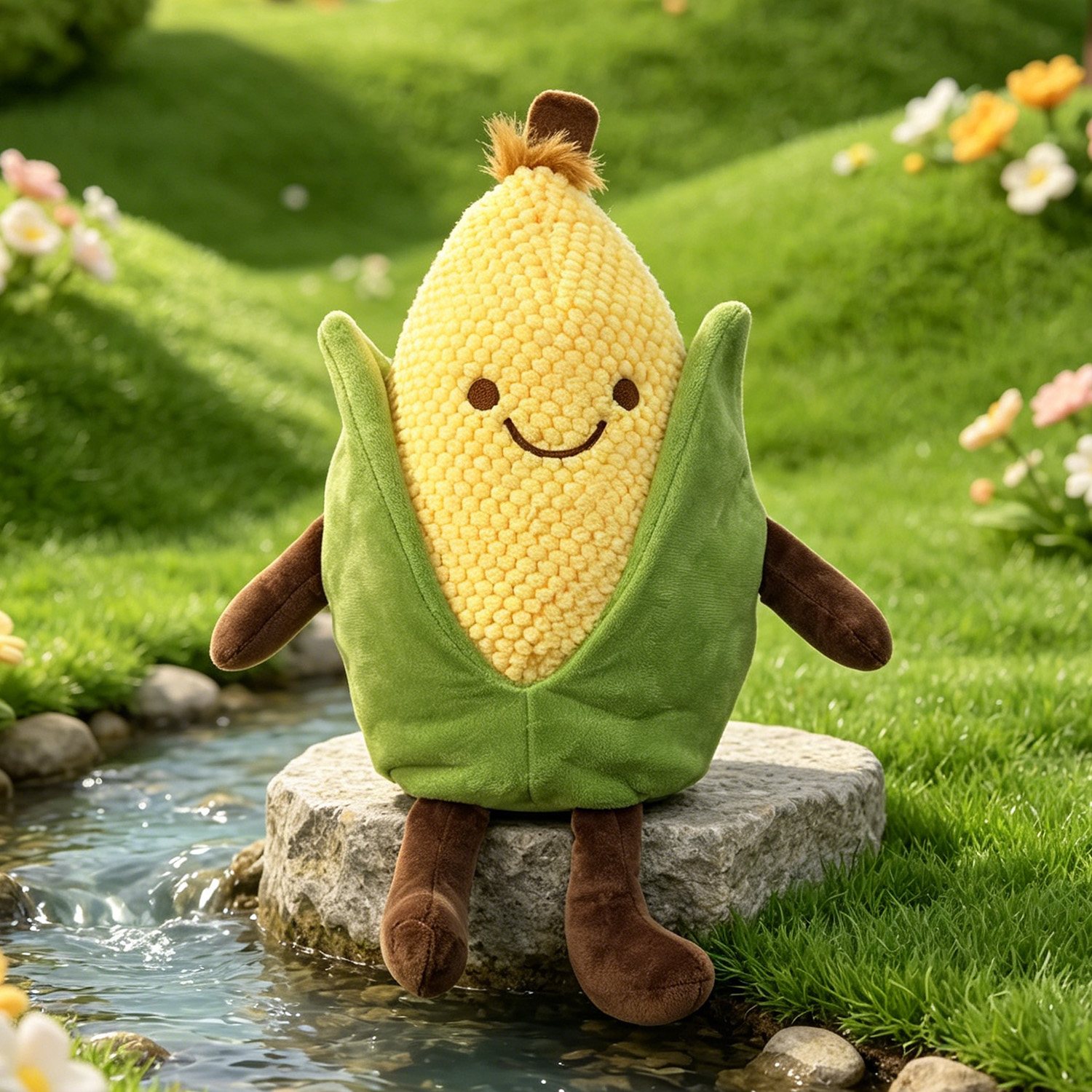
Measure from the flat support surface to the highest specified body point while the toy is placed in its natural seated posture. State whether upright ears, hair, horns, hats, or other projections are included. For a toy with flexible ears, define their intended position rather than allowing an operator to stretch them upward.
Standing height
Measure from the bottom of the feet to the defined top point in the approved standing posture. If the toy cannot stand unsupported, specify a positioning fixture or a flat, relaxed pose. “Standing height” should describe a measurement method, not imply that the finished toy is self-standing.
Longest dimension
This is the greatest straight-line dimension between two defined endpoints. It is useful for elongated animals, pillows, and unusual shapes. State whether a tail, extended limb, or accessory is included and whether flexible parts are arranged naturally or aligned without tension.
Width and depth
Height alone does not describe shelf presence or carton volume. Define width at a repeatable location—for example, maximum body width excluding arms—and depth from front to back at another named location. If arms, wings, or clothing create the maximum width, add a second overall measurement.
Protruding parts and attachments
List ears, antlers, tails, wings, fabric tabs, loops, keyrings, suction cups, and removable accessories separately. A practical specification can include both “body height excluding ears” and “overall height including ears in natural position.” Hardware should have its own dimensions, finish, and attachment requirements.
Control the Measurement Method
Plush compresses during handling and transport. A repeatable method is more valuable than an unrealistically exact number. Add these conditions to the drawing or measurement sheet:
- Remove the product from compression packaging, if applicable.
- Allow it to recover for an agreed conditioning period in the stated environment.
- Gently redistribute filling using a defined, non-destructive method; do not stretch the shell.
- Place the toy on a flat surface in the approved posture.
- Use a rigid ruler, tape, caliper, or fixture appropriate to the dimension.
- Measure between named landmarks without pressing into the plush.
- Record the result, operator, date, sample stage, and any observed posture issue.
Recovery should be evaluated, not assumed. The buyer and supplier can agree on how the sample is compressed, how long it rests, and which dimensions are checked before and after recovery. The acceptance criterion should be project-specific because materials, filling, shape, and packing method vary.
Set Tolerances That Match the Product
A tolerance is the permitted variation from a target dimension. Do not copy one blanket tolerance onto every point. A small embroidered eye spacing may need different control from overall body height; a long flexible tail may naturally vary more than a short torso.
Use bilateral limits, such as target plus/minus an agreed amount, or explicit minimum and maximum values. Decide how rounding affects acceptance. Also state whether a dimension is critical, major, or informational. Critical dimensions might include a machine-fit limit, package-fit limit, attachment loop, or feature position that affects the character’s expression.
Tolerance decisions should consider:
- pattern complexity and seam count;
- fabric stretch and pile;
- filling type, amount, and distribution;
- manual sewing and finishing variation;
- measurement repeatability;
- safety, packaging, and channel constraints;
- the visual effect of variation at the chosen scale.
Ask for supplier feedback before freezing tight limits. A dimension can be measurable yet not realistically controllable at the requested tolerance without changing construction.
Build a Sample Approval Table
Use one controlled table for prototype, revised sample, pre-production sample, and retained reference.
| Point ID | Dimension and landmarks | Include/exclude | Target cm (in) | Tolerance | Sample result | Status/comment |
|---|---|---|---|---|---|---|
| A | Seated base to top of head | Exclude ears | Buyer to define | Agreed by project | Record | Approve/revise |
| B | Seated base to ear tip | Ear in natural pose | Buyer to define | Agreed by project | Record | Approve/revise |
| C | Maximum body width | Exclude arms | Buyer to define | Agreed by project | Record | Approve/revise |
| D | Overall width | Include arms | Buyer to define | Agreed by project | Record | Approve/revise |
| E | Front-to-back depth | At widest torso point | Buyer to define | Agreed by project | Record | Approve/revise |
| F | Tail length | Seam junction to tip, no tension | Buyer to define | Agreed by project | Record | Approve/revise |
| G | Attachment loop | Exposed loop length | Buyer to define | Agreed by project | Record | Approve/revise |
Add the drawing revision, sample ID, packaging state, conditioning time, and approver names. Convert approval comments into controlled document revisions.
A Practical Size-Specification Checklist
Before approving a plush size, confirm that the file includes:
- intended channel and user context;
- controlling unit and conversion rule;
- seated, standing, or longest-dimension definition;
- width, depth, and overall envelope;
- inclusion or exclusion of all projections;
- natural posture and support method;
- pre-measurement conditioning and compression recovery method;
- target, tolerance, and importance class for each point;
- measuring tool and landmark diagram;
- sample-stage results and dated approvals;
- packaging dimensions checked separately from toy dimensions;
- market-specific safety and labeling review assigned to a qualified party.
FAQs
What does a 10-inch plush toy measurement usually mean?
There is no universal meaning. It may describe seated height, standing height, or overall length. Ask for a dimensioned drawing that identifies the endpoints and whether ears, tails, or accessories are included.
Should ears and tails be included in plush toy height?
Include them in an overall measurement when relevant, but also record the body measurement separately. Define the position of flexible parts so different operators do not measure a stretched ear one time and a relaxed ear the next.
Is 25 cm the same as 10 inches?
Not exactly. Twenty-five centimeters is approximately 9.84 inches, while 10 inches equals 25.4 cm. Choose one controlling unit and treat the converted figure as a reference unless both parties intentionally agree otherwise.
How should a plush toy be measured after compression packing?
Define an unpacking and conditioning procedure, allow the agreed recovery period, arrange the toy without stretching it, and measure it in the approved posture. Record both dimensional recovery and visible shape recovery if they are acceptance criteria.
What is a reasonable plush toy size tolerance?
It depends on the dimension, scale, fabric, pattern, filling, process, and end-use constraint. The buyer and manufacturer should agree on achievable, point-specific tolerances after reviewing samples rather than applying an unsupported universal value.
Which size is best for a claw machine or bag charm?
No single size is automatically best. For a claw machine, assess machine geometry, grip behavior, weight distribution, chute, and prize plan. For a bag charm, assess body dimensions, total hanging length, hardware, attachment strength, and applicable requirements.
Recommended Internal Links
- Custom Plush Toy Manufacturing Process
- Plush Toy Materials and Fabric Selection Guide
- Plush Toy Packaging Options for Retail and E-commerce
- Plush Toy Quality Control and Inspection Checklist
- Request a Custom Plush Toy Quote
CTA: Turn Your Concept Into a Measurable Specification
Share your artwork, intended channel, target size envelope, reference photos, packaging constraints, and destination market with Beibaotoys. The team can review the construction concept and help organize the dimensions that should be confirmed through sampling. Request a project-specific discussion before approving tooling, materials, packaging, or production.