
A plush product can be a gift, decorative accent, desk companion, cushion-like object, or tactile item built around a relaxation theme. These roles overlap but are not interchangeable. Selection should begin with use case, audience, and market—not a trend label alone.
This guide helps buyers turn a collection idea into product decisions. It does not predict sales; results also depend on positioning, channel, merchandising, timing, competition, and execution.
Start with the collection’s job
Define what each SKU contributes. A broad assortment becomes easier to manage when every product has a primary role and a secondary role.
- Everyday gifting: approachable designs, manageable package size, and presentation that works across several occasions.
- Anniversary or birthday gifting: a stronger story, coordinated colors, message space, themed accessories, or premium presentation.
- Home décor: proportions, palette, silhouette, and surface finish that complement a room or display.
- Desk décor: a stable footprint, clear front view, compact dimensions, and visual interest at close range.
- Cushion or companion format: body support, huggable volume, shape recovery, seam placement, and a comfortable contact surface.
- Stress-relief concept: tactile engagement, squeezable or holdable form, friendly expression, and calming visual language—without medical or therapeutic promises.
A product can serve more than one role, but its specification should identify the priority. Décor emphasizes silhouette and stability; hugging emphasizes filling distribution and seam placement.
Match format to the gifting occasion
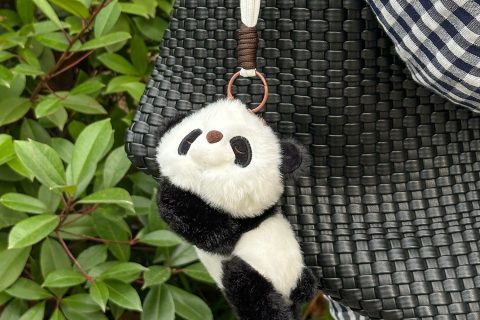
Small pendants, keychains, and compact characters may suit add-on gifts or impulse displays. Standard stuffed formats offer more presence, while cushion-like products require more storage and logistics planning.
Anniversary and birthday collections can use coordinated colors, a message card, themed embroidery, or gift-ready packaging. Define the giver, recipient, and unboxing experience. Confirm the legal right to use every submitted logo, slogan, character, or graphic.
Design for home and desk display
Evaluate home décor plush at normal viewing distance and from its visible angles. Specify whether it must sit, stand, lean, or lie flat; base shape, filling, appendages, and fabric direction influence stability.
For desk décor, measure the footprint as well as height. Check whether tails, leaves, ears, or accessories use too much space and whether the face remains visible behind nearby objects. Review the collection palette with physical swatches and approved samples rather than screen colors alone.
Specify cushion and companion qualities
“Soft” is not a complete specification. Define surface feel, firmness, compressibility, weight, shape recovery, and support. Fabric pile affects touch and detail; filling type, quantity, and distribution affect feel and recovery.
For cushion and companion formats, test seam placement, pressure points, fit in the arms, face distortion, and shape recovery. When packing may compress the product, compare the prototype before and after a packing trial and agree on acceptable unpacked appearance and reshaping instructions.
Position stress-relief concepts responsibly
A stress-relief concept can use sensory and visual cues: a squeezable body, rounded silhouette, gentle color palette, comforting texture, repetitive tactile feature, or friendly expression. Marketing can describe the intended experience in ordinary lifestyle terms, such as “made for squeezing,” “a soft desk companion,” or “a calming-inspired design.”
Do not claim that a plush product treats anxiety, improves a medical condition, provides therapy, or delivers a guaranteed psychological outcome unless appropriate evidence and regulatory review support the exact statement. The product name, packaging, product page, advertising, and retailer copy should use the same approved claim framework.
Distinguish conventional stuffing from purpose-built sensory designs. Beads, pellets, removable parts, scent, electronics, or heatable inserts create additional construction, labeling, testing, and market-review questions.
Choose themes with a collection structure
Animals, plants, and foods offer flexible visual systems, but each behaves differently in design and manufacturing.
Animal-inspired plush
Animals support expressive faces and recognizable series. Choose a realistic, simplified, or character-led style, then review how ears, tails, wings, horns, whiskers, and legs affect sewing, packing, stability, and inspection.
Plant-inspired plush
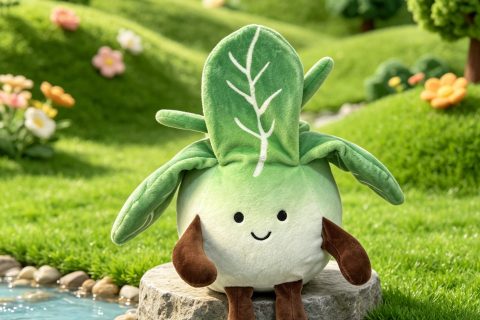
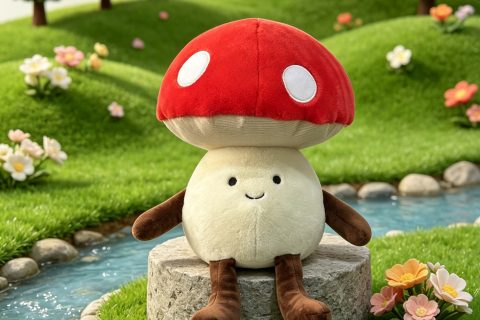
Flowers, succulents, mushrooms, and leafy forms suit décor-led assortments. Review color blocking, whether stems or leaves droop or obscure the face, and whether a controlled pot-shaped base is needed for stability.
Food-inspired plush
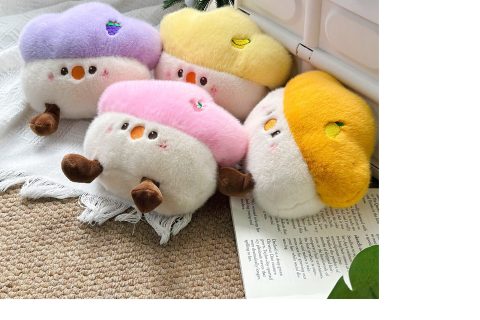
Desserts, drinks, fruit, vegetables, and snack shapes can suit novelty gifts and desk collections. Use recognizable outlines and review toppings, straws, handles, wrappers, and layered decorations for construction, packing, and age-related considerations. Shared fabrics, colors, facial language, labels, and packaging can unify the assortment.
Build a selection matrix
| Collection role | Useful format direction | Key specification questions | Packaging focus |
|---|---|---|---|
| Everyday gift | Compact or standard character | Is the design broadly understandable and easy to present? | Neat appearance, message or hangtag space |
| Anniversary/birthday | Themed character or gift set | Which occasion cues remain useful after the event? | Reveal experience, card, color coordination |
| Home décor | Sculptural plush or cushion | Does it display correctly from relevant angles? | Shape protection and shelf efficiency |
| Desk décor | Small stable character | What is the true footprint and front-view height? | Compact pack and scuff protection |
| Companion/cushion | Huggable or supportive form | What firmness, recovery, and seam placement are required? | Compression limits and reshaping guidance |
| Stress-relief concept | Squeezable rounded format | What tactile experience is intended without health claims? | Claim consistency and feature disclosure |
Use this matrix as a briefing tool, not a substitute for prototypes. Two products of the same nominal size can feel and pack differently because of silhouette, fabric, filling, and accessories.
Decide size using context, not labels
Terms such as mini, standard, and jumbo are interpreted differently across suppliers and markets. Specify finished dimensions in a stated orientation and provide measurement diagrams. Include tolerances where they matter.
Compare gift items with their bag, box, carton, or display; mock up décor items on their intended furniture; and use a paper footprint for desk products. Keep age-related product rules separate from lifestyle imagery. Because size affects packed volume, freight, and shelf density, request packed dimensions and weights for the approved configuration.
Evaluate touch with a material vocabulary
Replace subjective requests such as “very soft” with a coded swatch and definitions for pile, density, stretch, sheen, and hand feel. Use approved physical samples to review filling firmness, detail legibility after compression, and recovery. Retain coded swatches and samples for later comparison.
Do not use “hypoallergenic” without substantiation for the exact SKU and claim context. Likewise, general words such as “safe” should not replace defined tests, construction requirements, labeling, and market-specific evidence.
Plan cleaning and care before artwork is final
Cleaning expectations affect material selection, trims, printing, embroidery, inserts, and labels. Decide whether the product will carry surface-clean, hand-wash, or another care instruction only after relevant material and product-level review. Verify that decorations, colors, filling behavior, and shape remain acceptable under the validated method.
Avoid describing an item as washable based solely on the outer fabric. The complete product—including thread, printing, accessories, filling, and internal components—determines suitable care. Ensure online copy, sewn labels, hangtags, and packaging do not give conflicting instructions.
Treat packaging as part of the product
Packaging supports presentation, protection, traceability, logistics, and required information. Compression may improve logistics efficiency for suitable items, but evaluate recovery, wrinkling, decoration distortion, and unpacking. Define individual packs, gift packaging, hangtags, labels, barcodes, assortment rules, carton details, shipping marks, and reshaping instructions; request a packed sample when presentation matters.
Align audience, age grading, and market requirements
Identify the intended user group, destination market, and sales channel for each SKU. Product design, components, labels, warnings, packaging, traceability, and testing must be reviewed against applicable requirements. Do not infer suitability for infants or young children from a soft appearance, embroidered face, or simple shape.
Ask for evidence identifying the exact product or supportable family, tested materials and construction, relevant entities, laboratory, methods, dates, and market. One document does not automatically cover every color, size, accessory, or design; keep a SKU-level document matrix and obtain qualified advice where needed.
Do not make broad medical, therapeutic, hypoallergenic, safety, or infant-suitability claims without evidence for the exact SKU, claim, and market.
A practical collection brief
Before requesting samples or a quotation, prepare:
- Primary and secondary role for each SKU
- Audience, intended age grading, destination, and sales channel
- Theme, artwork, colors, and proof of rights where applicable
- Finished size, orientation, and measurement diagram
- Target surface feel, filling firmness, and shape behavior
- Construction, decoration, accessory, and label requirements
- Validated cleaning or care direction to be assessed
- Individual and master-carton packaging expectations
- Required tests, documents, and buyer-specific inspection points
- Launch window and delivery destination for project planning
This brief allows a manufacturer to identify feasibility questions and separates confirmed specifications from choices that still require sampling.
Frequently asked questions
What plush format works best for gifting?
There is no universal best format. Match the size, theme, presentation, and package to the recipient, occasion, channel, and budget structure, then confirm the result through samples.
Are food- or plant-shaped plush products only for children?
No. These themes can suit novelty gifts, décor, desk assortments, and adult-oriented collections. However, intended audience and age grading must be defined and reflected in design, labeling, testing, and marketing.
Can a plush item be marketed for stress relief?
It can be positioned around a tactile, squeezable, or relaxation-inspired lifestyle concept, but avoid medical, therapeutic, or guaranteed-outcome claims unless properly substantiated and reviewed.
How should buyers compare plush softness?
Use coded material swatches and approved samples, then describe pile, density, stretch, surface feel, filling firmness, compressibility, and recovery rather than relying on “soft” alone.
Is compression packing suitable for every plush product?
No. Suitability depends on fabric, filling, structure, decoration, storage duration, presentation, and acceptable recovery. Test the approved packed configuration before committing.
What care instruction should a plush product carry?
Use only a care method validated for the complete SKU. Outer fabric information alone is insufficient because trims, colors, decoration, filling, and internal components also affect cleaning.
Does one compliance report cover an entire collection?
Not automatically. Confirm that product identification, variants, materials, construction, age grading, test methods, and destination requirements support every SKU included.
Recommended Internal Links
These are suggested relative paths. Confirm or create the destination pages before publication.
- Custom Plush Toys and Stuffed Animals
- Plush Keychains and Bag Charms
- Plush Bags
- Seasonal Plush Products
- Customization Process
- Contact the Export Team
Build a Collection Around a Clearer Brief
Send Beibaotoys your concept, reference artwork, intended audience, destination market, target dimensions, touch direction, packaging idea, and expected product roles. The team can review development routes and identify the decisions needed for sampling and a project-specific quotation. Submit your collection brief and evaluate every proposed SKU against approved samples, specifications, documentation, and order terms.